Gran Canaria rose from the ocean around 14 million years ago. Layer upon layer of molten rock built the island we see today. Although valuable relics of the ancient jungle still remain, and are now expanding again, over a period of four centuries (from the end of the 15th to the end of the 19th century) most of it was cut down and the land used for subsistence farming and cattle rearing. Fruit trees, corn, potatoes and vegetables have been farmed here on small allotments, watered by the tradewinds, the life-giving breezes for the Doramas Jungle, which offload humidity before drying out as they pass over the peaks towards the south.
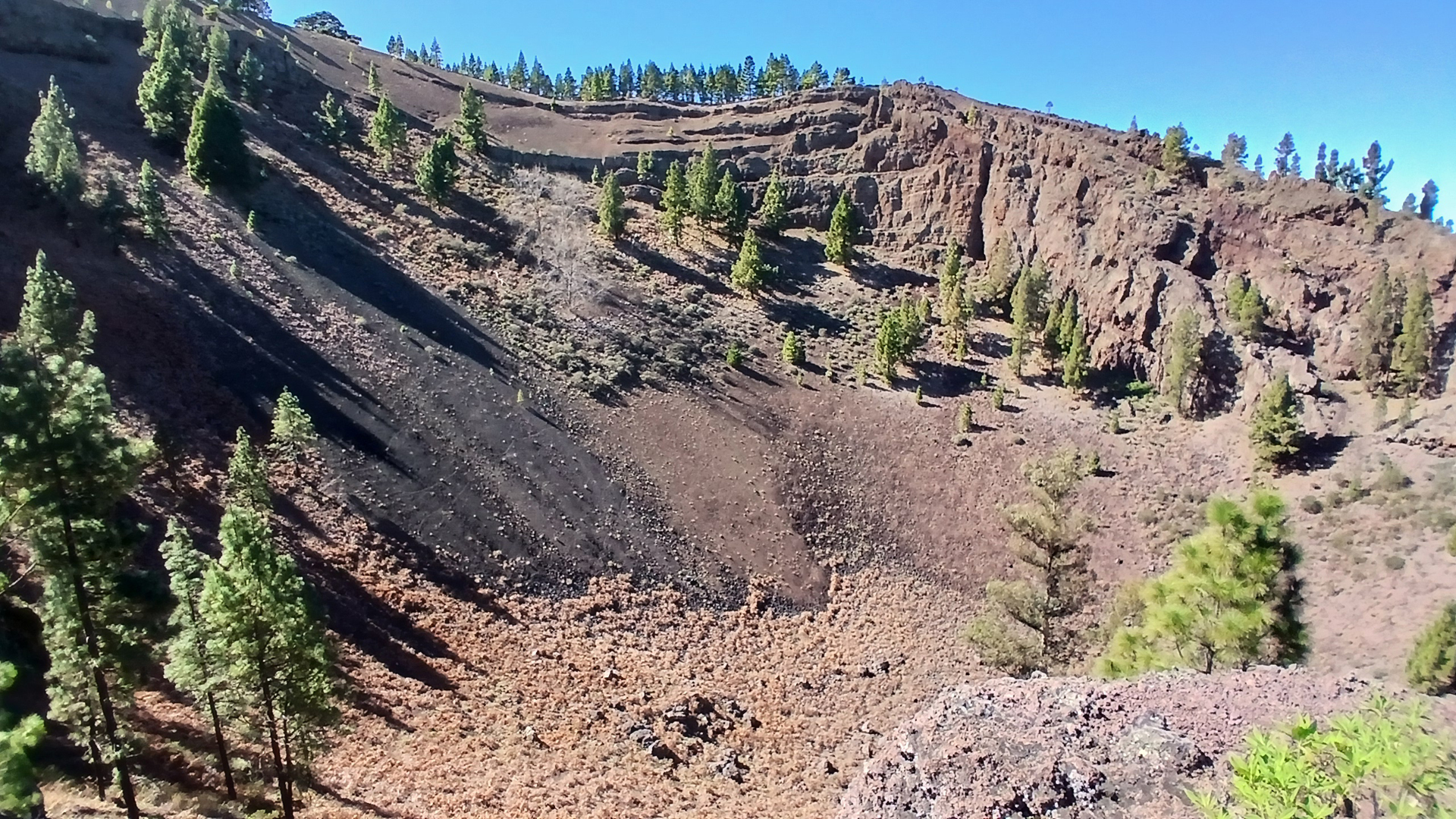
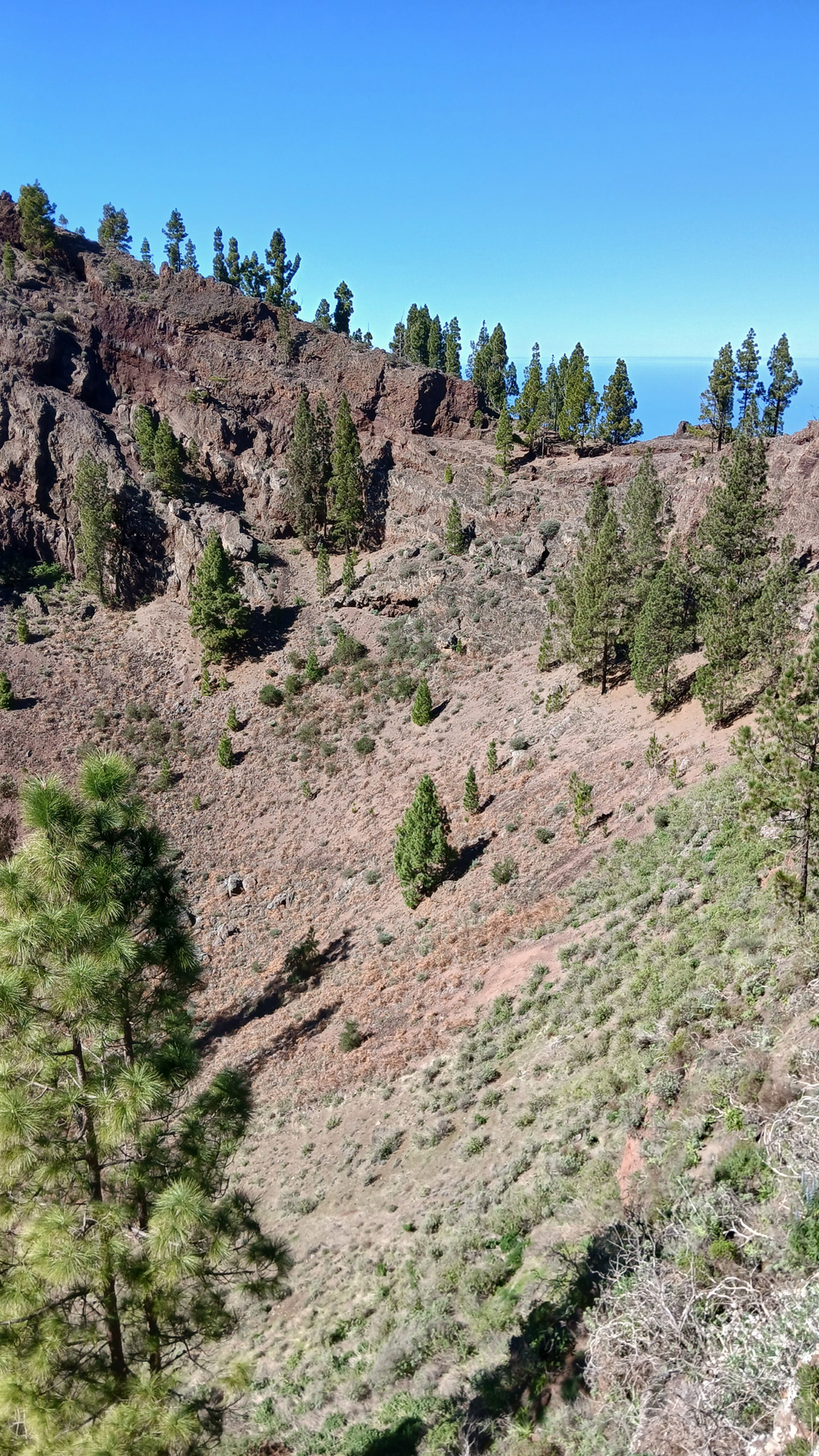
At our feet lies the la Caldera de los Pinos de Gáldar, a volcanic crater pertaining to the most recent volcanic cycle in the construction of Gran Canaria, as is the Montañón Negro volcano, situated to the east. They are twin peaks with an estimated age of 3.000 years. |