 |
Jan & Jan-Jan's Rejseklubben is an exclusive club, with only 2 members, and we do NOT accept new members. |
 |
 |
 |
 |
 |
 |
 |
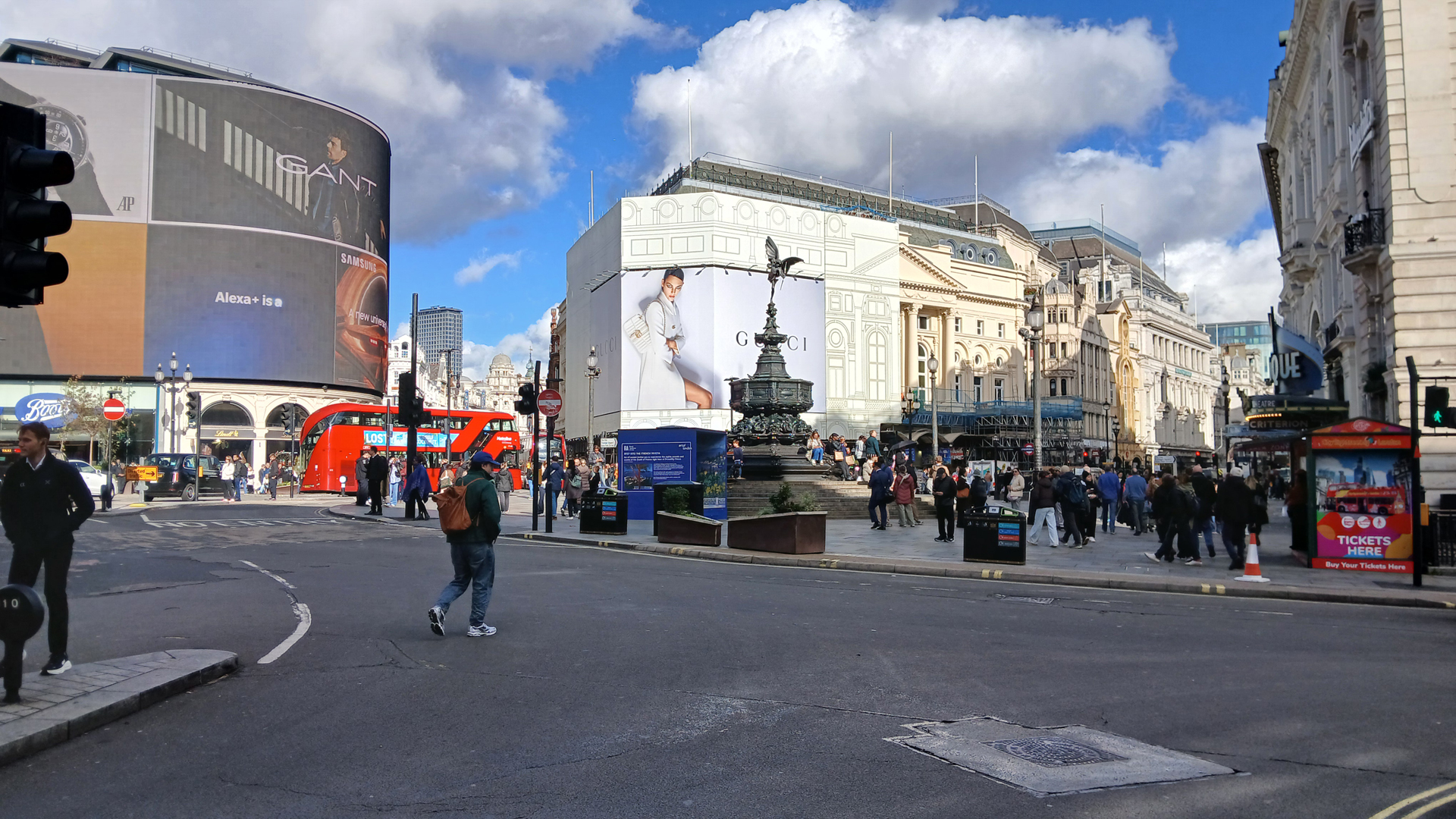
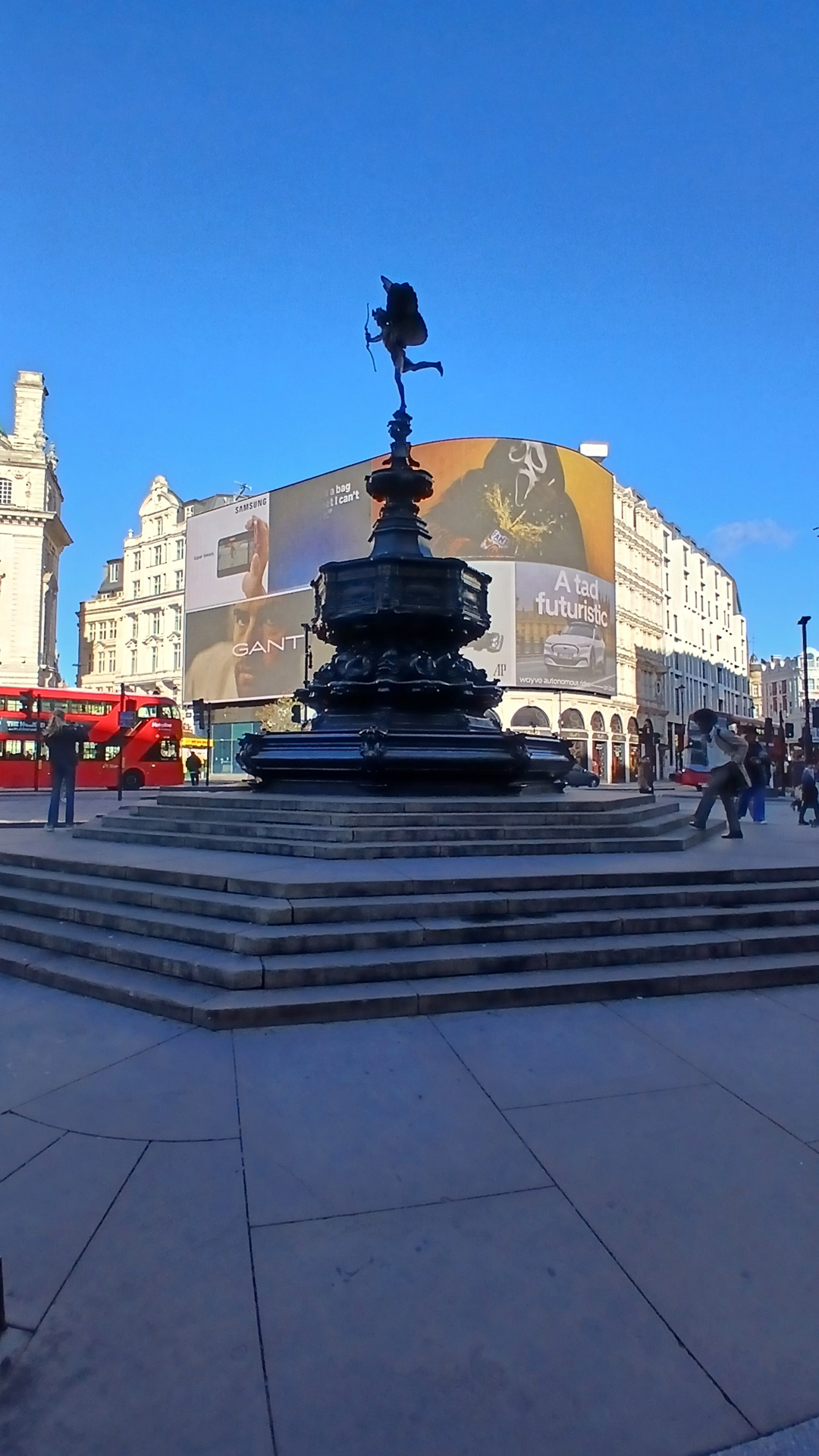
Piccadilly Circus is a road junction and public space of London's West End in the City of Westminster. It was built in 1819 to connect Regent Street with Piccadilly. In this context, a circus, from the Latin word meaning "circle", is a round open space at a street junction. The Circus now connects Piccadilly, Regent Street, Shaftesbury Avenue, the Haymarket, Coventry Street (onwards to Leicester Square) and Glasshouse Street. It is close to major shopping and entertainment areas in the West End. Its status as a major traffic junction has made Piccadilly Circus a busy meeting place and a tourist attraction in its own right. The Circus is particularly known for its video display and neon signs mounted on the corner building on the northern side, as well as the Shaftesbury Memorial Fountain and statue of Anteros (which is popularly, though mistakenly, believed to be of Eros). |
 Piccadilly Circus |
Underneath the plaza is Piccadilly Circus tube station, part of the London Underground system. Piccadilly Circus connects to Piccadilly, a thoroughfare whose name first appeared in 1626 as Piccadilly Hall, named after a house belonging to one Robert Baker, a tailor famous for selling piccadills, or piccadillies, a term used for various kinds of collars. The street was known as Portugal Street in 1692 in honour of Catherine of Braganza, the queen consort of King Charles II but was known as Piccadilly by 1743. Piccadilly Circus was created in 1819, at the junction with Regent Street, which was then being built under the planning of John Nash on the site of a house and garden belonging to a Lady Hutton; the intersection was then known as Regent Circus South (just as Oxford Circus was known as Regent Circus North) and it did not begin to be known as Piccadilly Circus until the mid-1880s, with the rebuilding of the Regent Street Quadrant and the construction of Shaftesbury Avenue. In the same period the circus lost its circular form. During World War II many servicemen's clubs in the West End served American soldiers based in Britain, including Rainbow Corner established by the American Red Cross just off Piccadilly Circus. So many prostitutes roamed the area approaching the soldiers that they received the nickname "Piccadilly Commandos", and both Scotland Yard and the Foreign Office discussed possible damage to Anglo-American relations. The Shaftesbury Memorial Fountain at Piccadilly Circus was erected in 1893 to commemorate the philanthropic works of Anthony Ashley Cooper, 7th Earl of Shaftesbury. It was removed from the Circus twice and moved from the centre once. The first time was in 1922, so that Charles Holden's new tube station could be built directly below it. The fountain returned in 1931. During the Second World War, the fountain was removed for the second time and replaced by advertising hoardings. It was returned again in 1948. When the Circus underwent reconstruction work in the late 1980s, the entire fountain was moved from the centre of the junction at the beginning of Shaftesbury Avenue to its present position at the southwestern corner. |


|
www.rejseklubben.info Copyright © All Rights Reserved |
|